A successful wardrobe project starts long before the first panel is cut. The most useful early conversations are rarely about door colour — they are about the room itself, the architecture you are working with, and the habits of the people who will use the wardrobe every day.
Start with the room
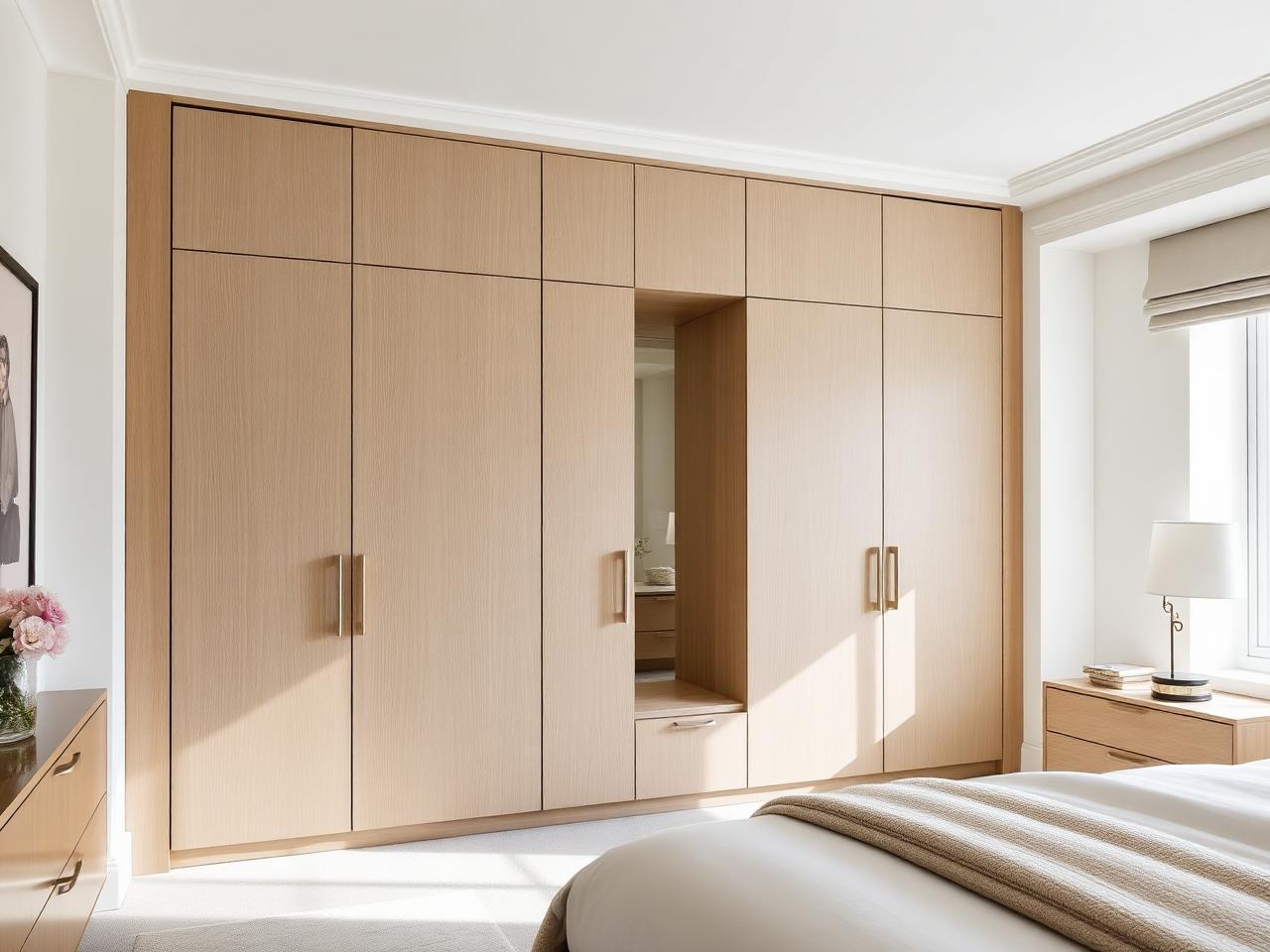
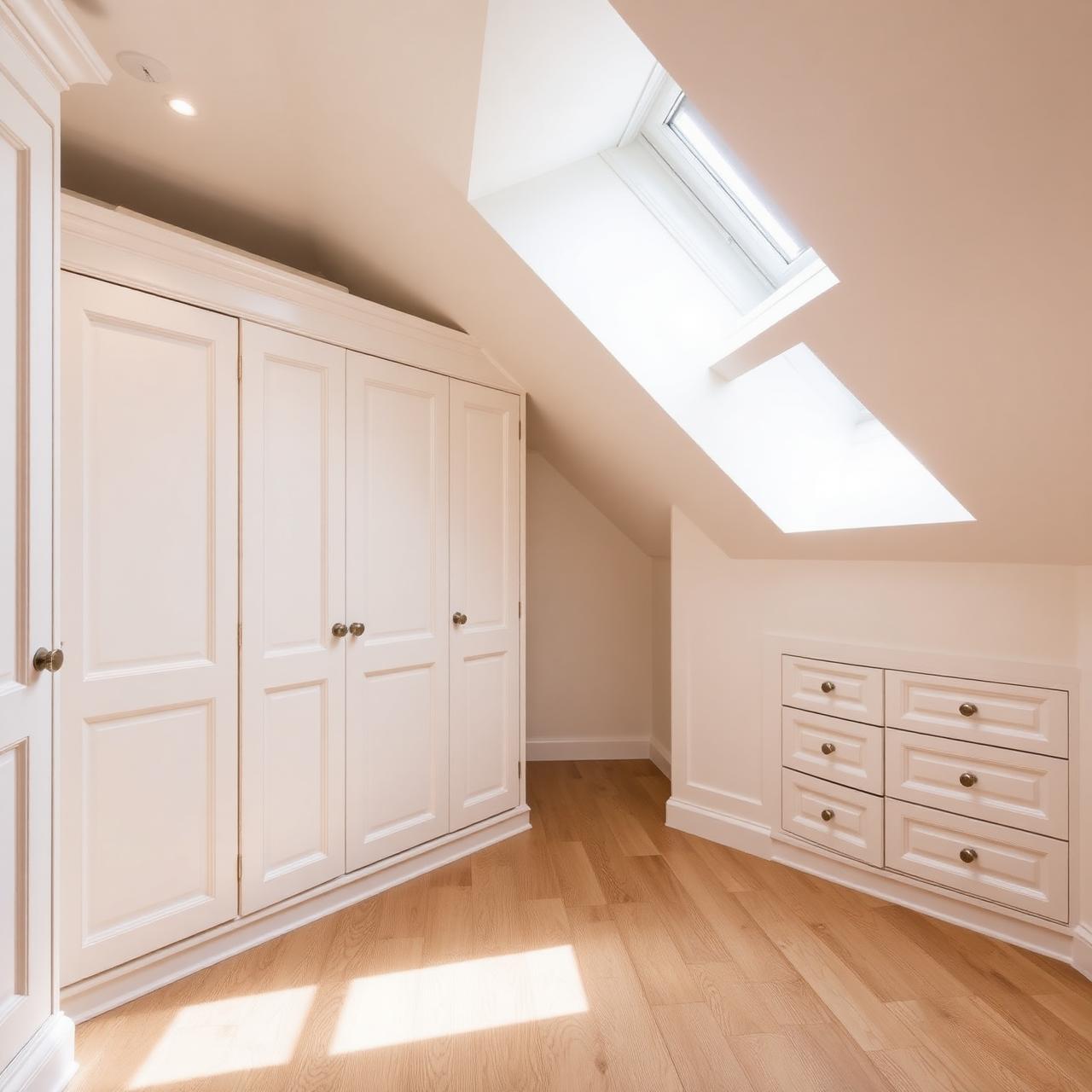
Measure ceiling height honestly. Note where skirting, picture rails, cornice, radiators, sockets and switches sit. Look at the natural light: a wardrobe that faces a window will read differently in a deep walnut veneer than in a soft warm white. London bedrooms — especially in period townhouses and converted apartments — often have small irregularities that decide whether a wardrobe feels integrated or placed.
Plan the inside first
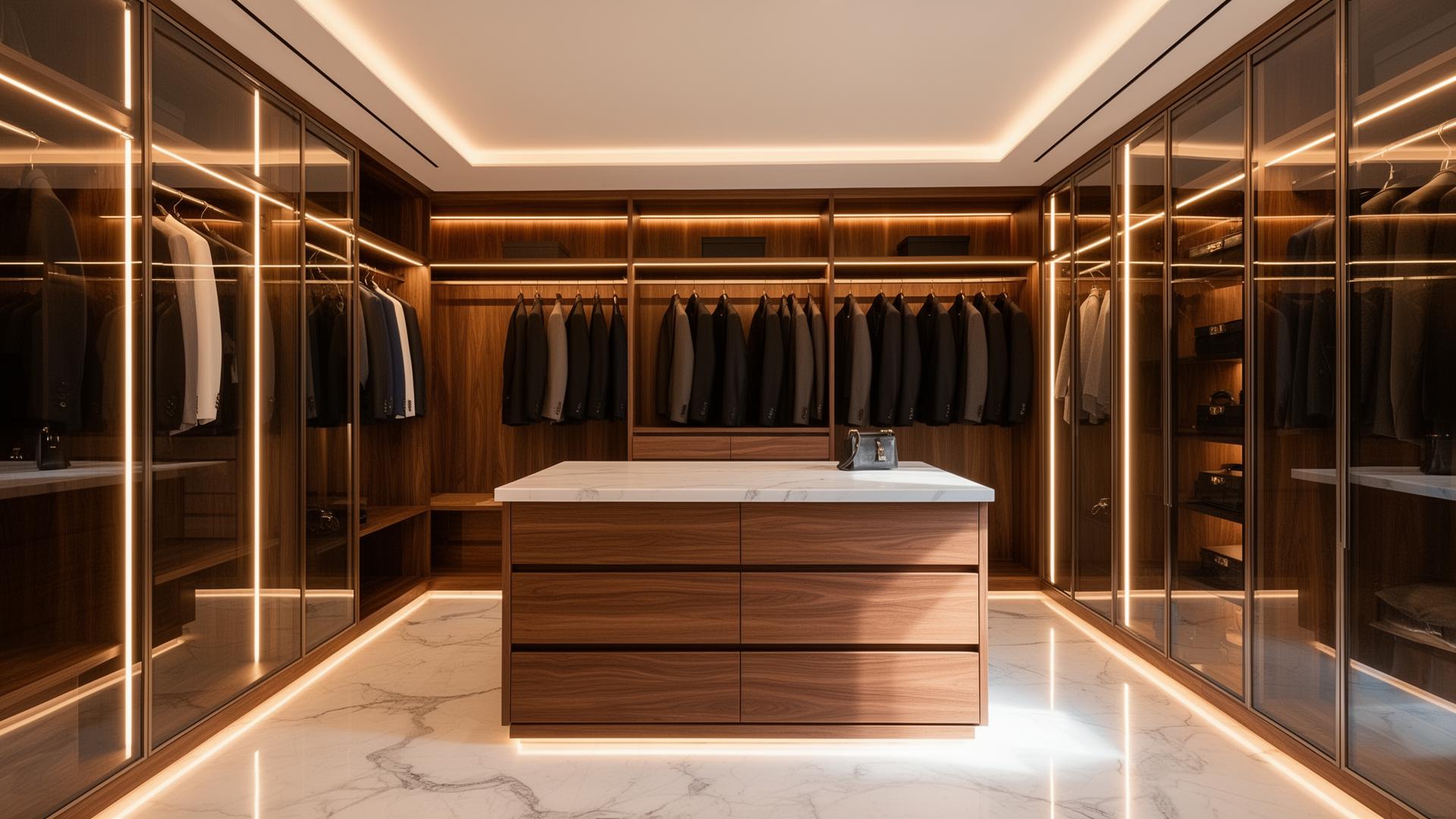
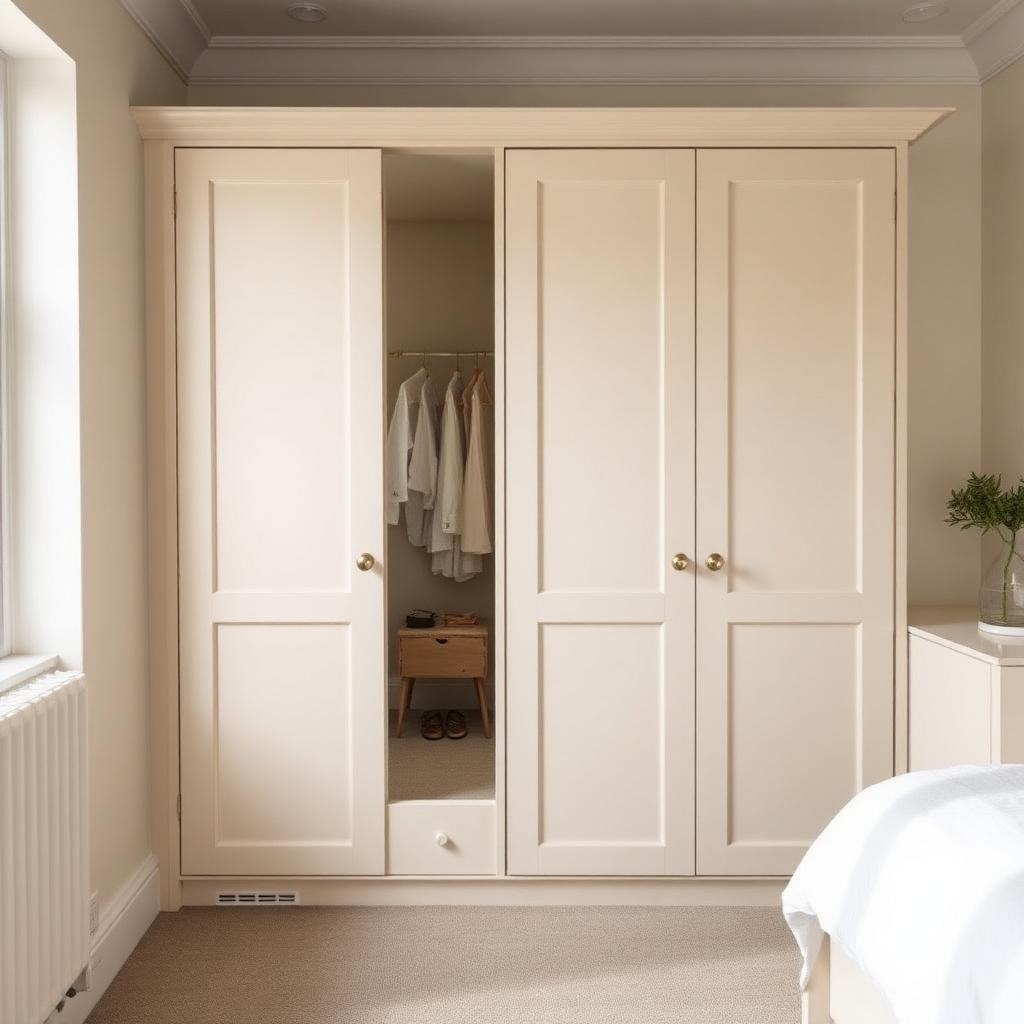
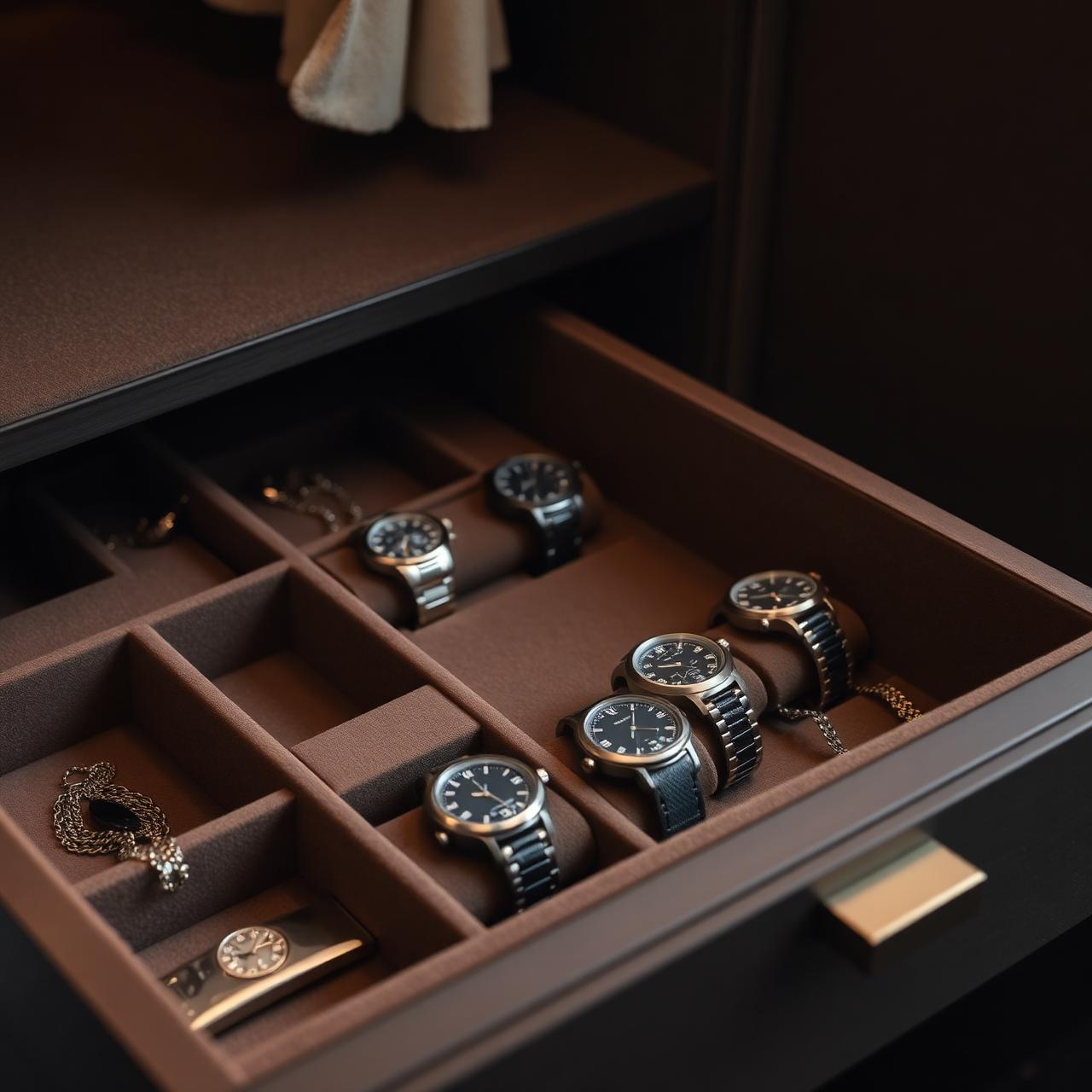
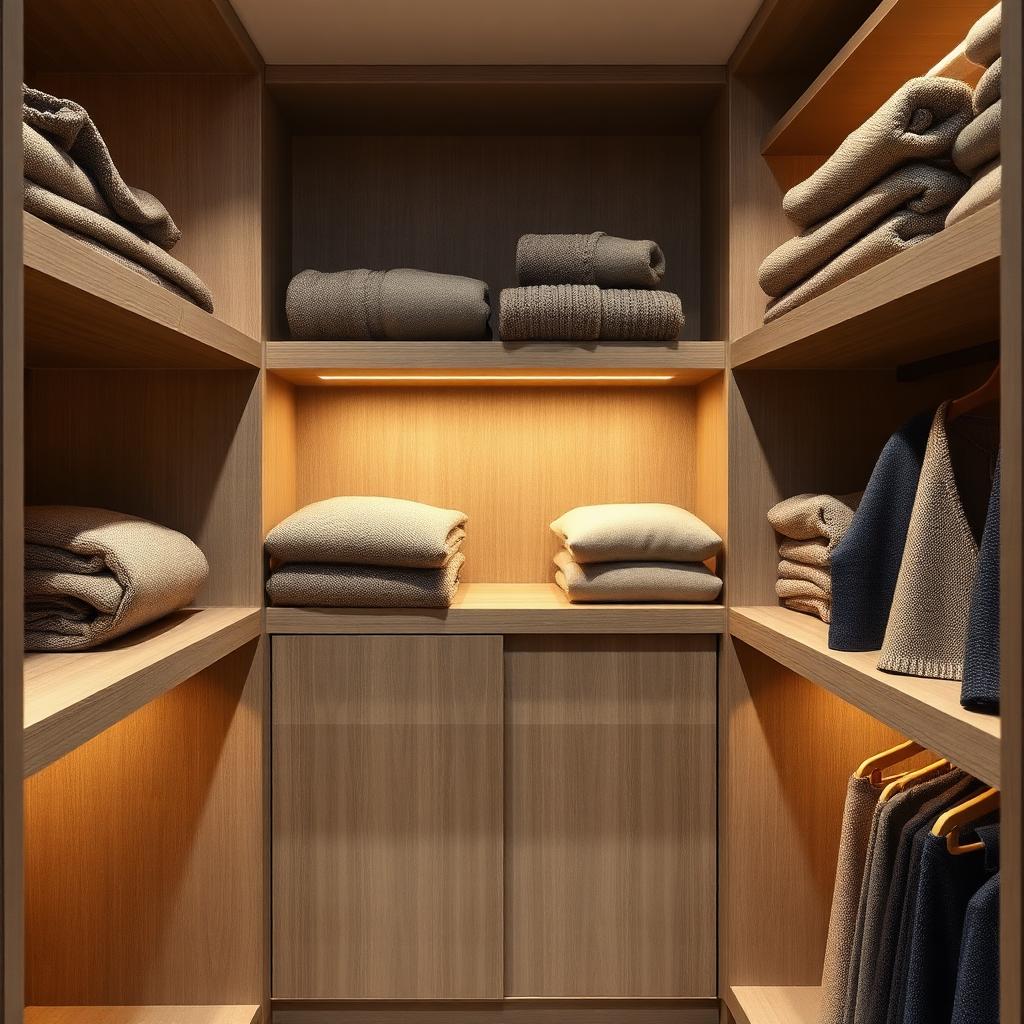
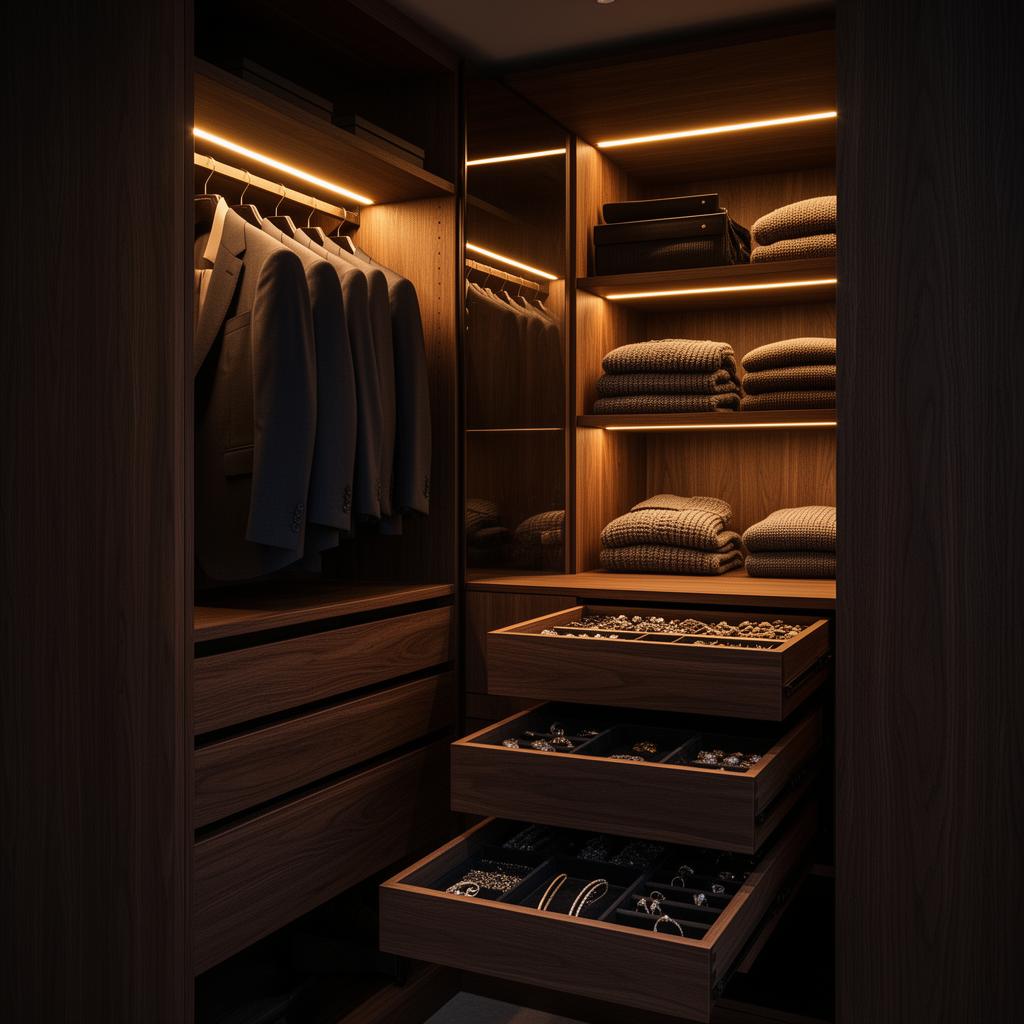
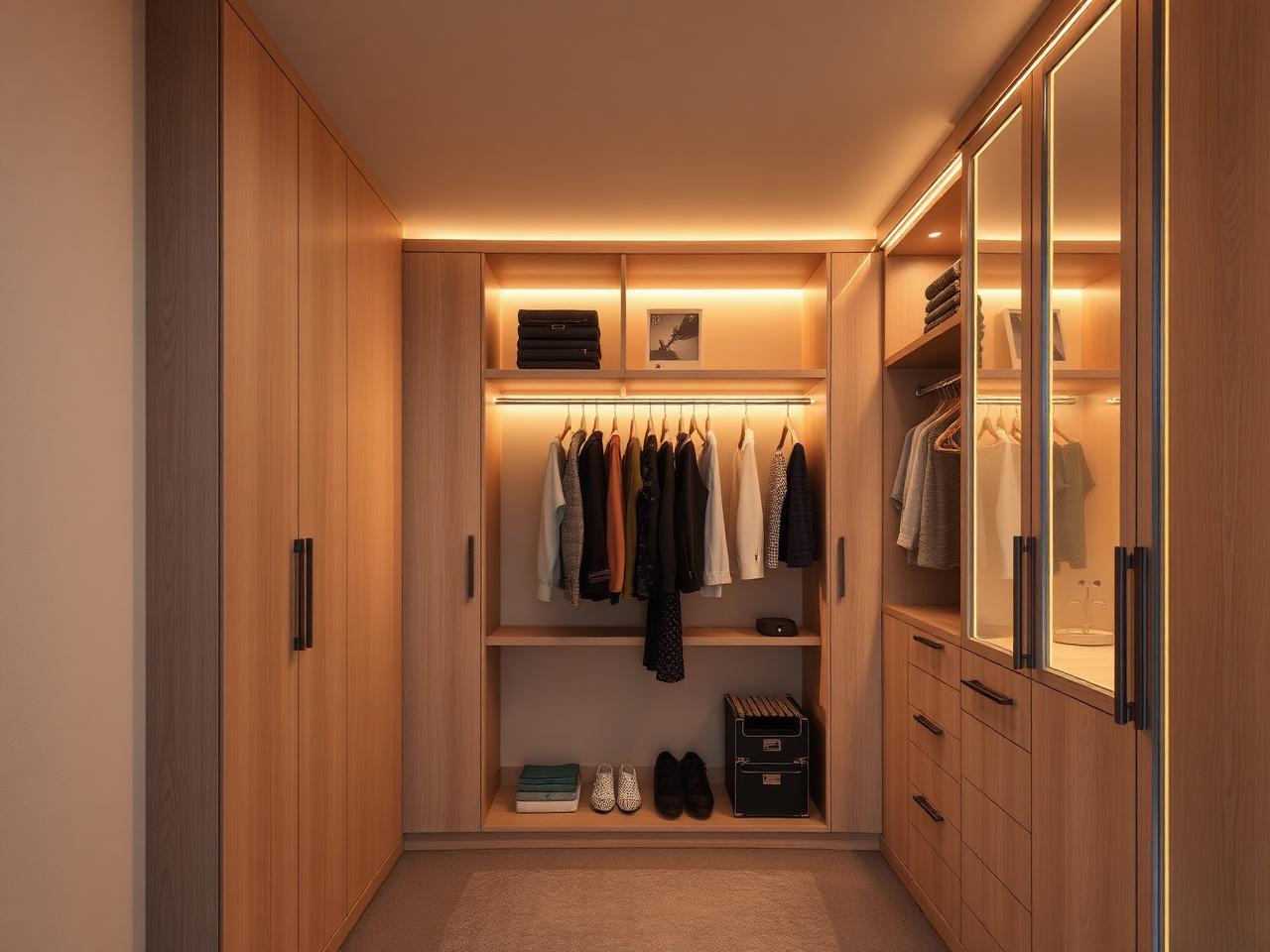
Before choosing doors, think about what actually needs to live inside. Long hanging for dresses and coats, double hanging for shirts and jackets, drawer counts, shoe shelves, accessory and jewellery trays, valuables drawers and luggage storage are not after-thoughts — they are the brief. Once the interior layout is right, doors and proportions can be detailed around it.
Choose materials carefully
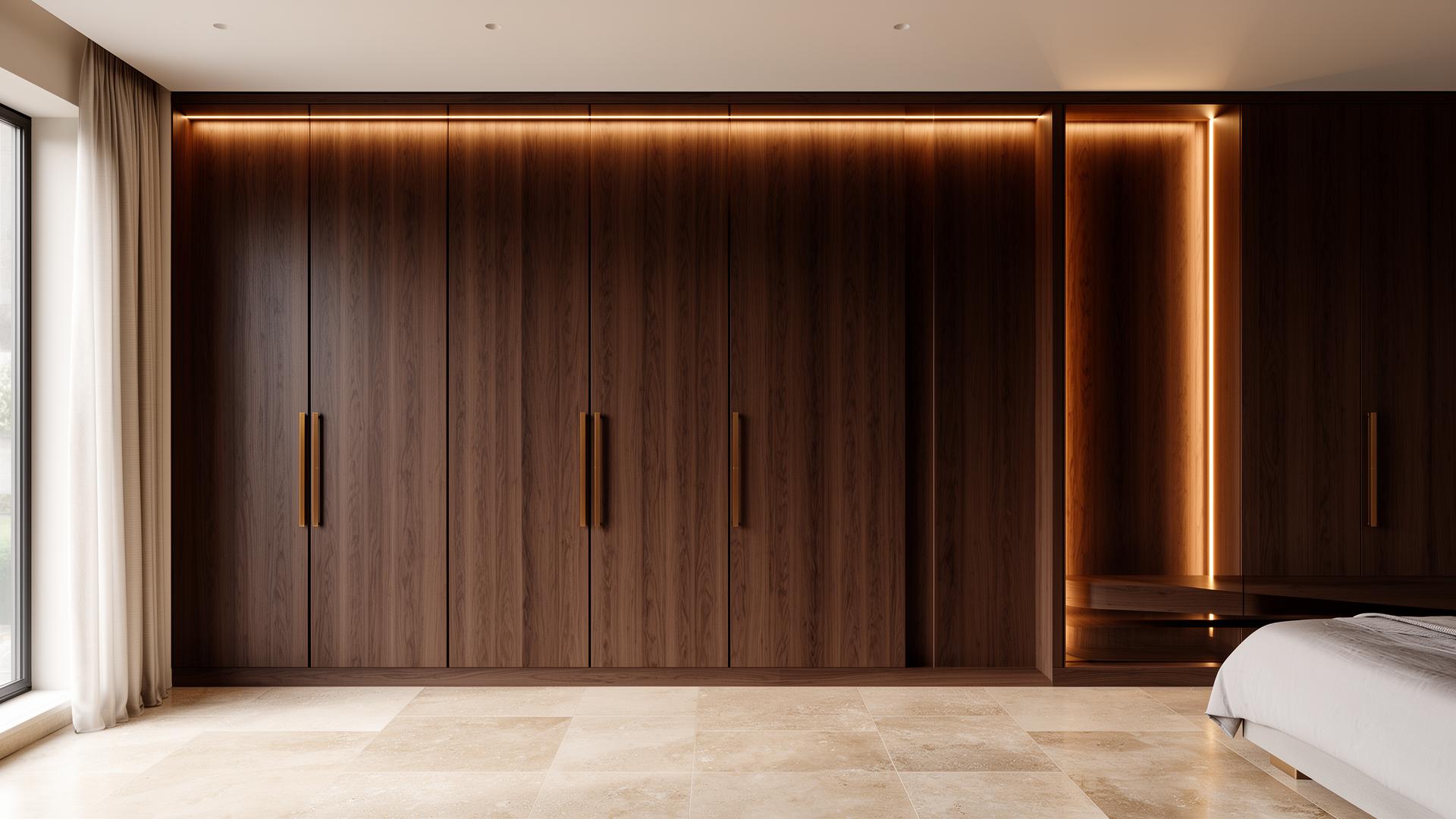
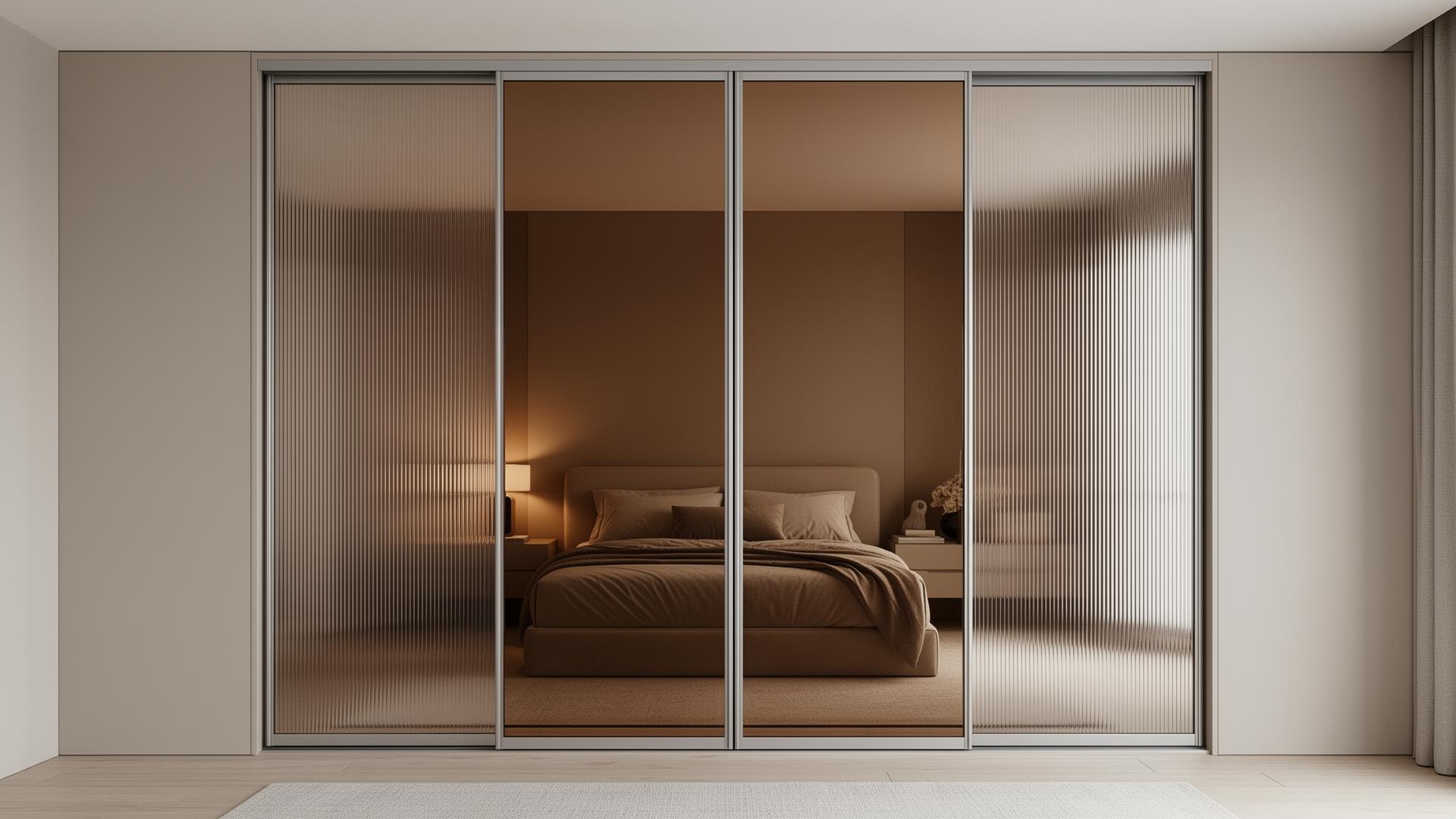
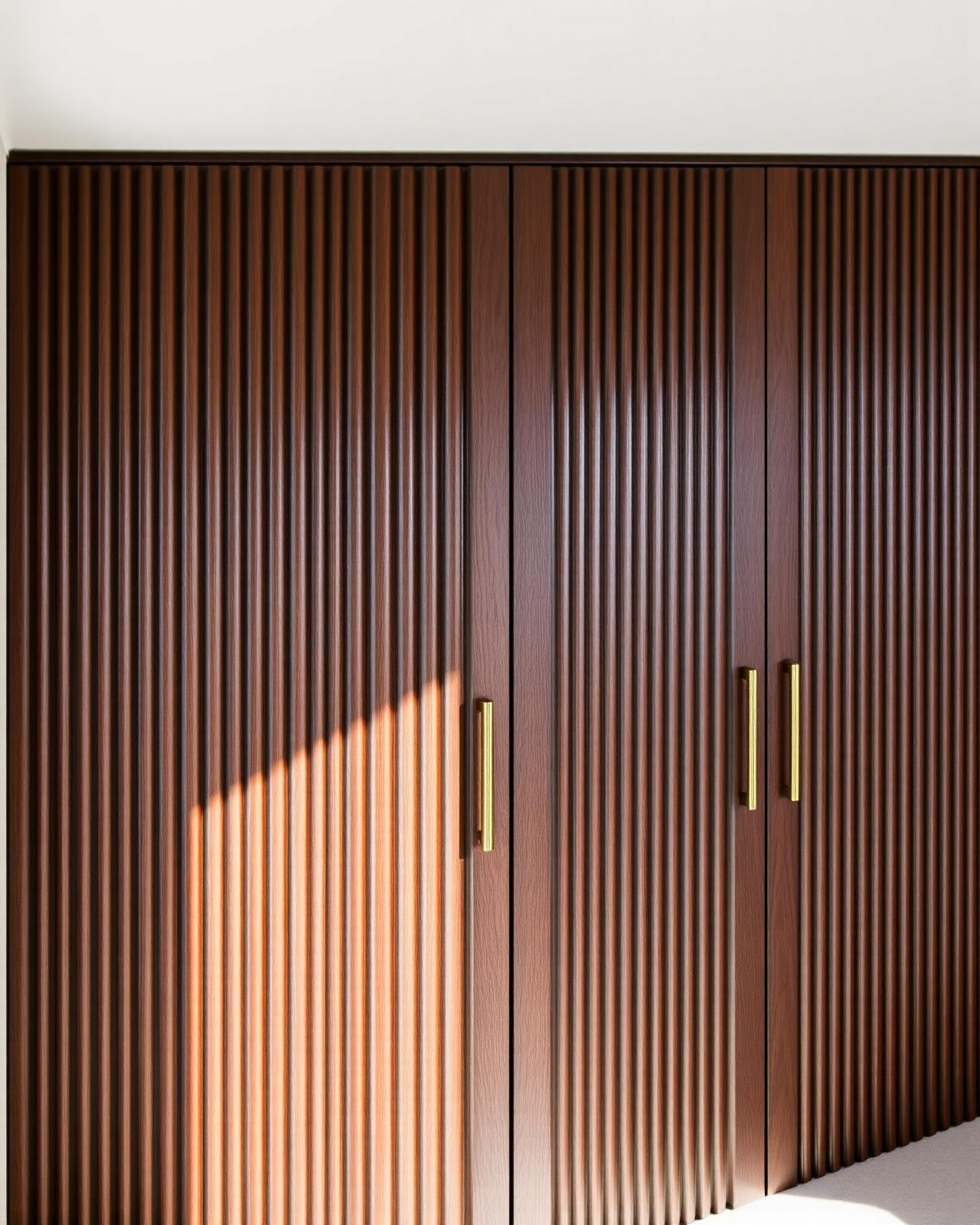
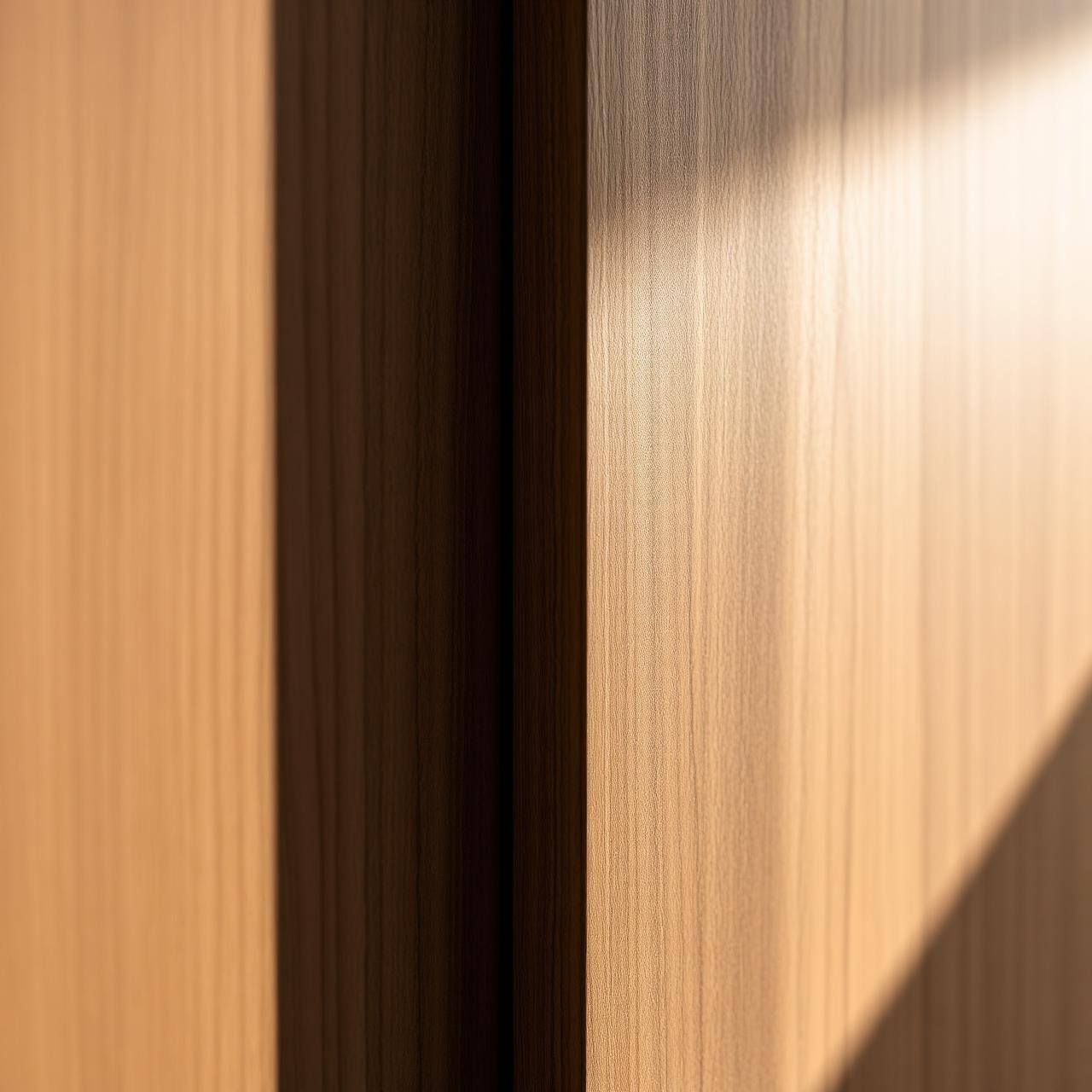
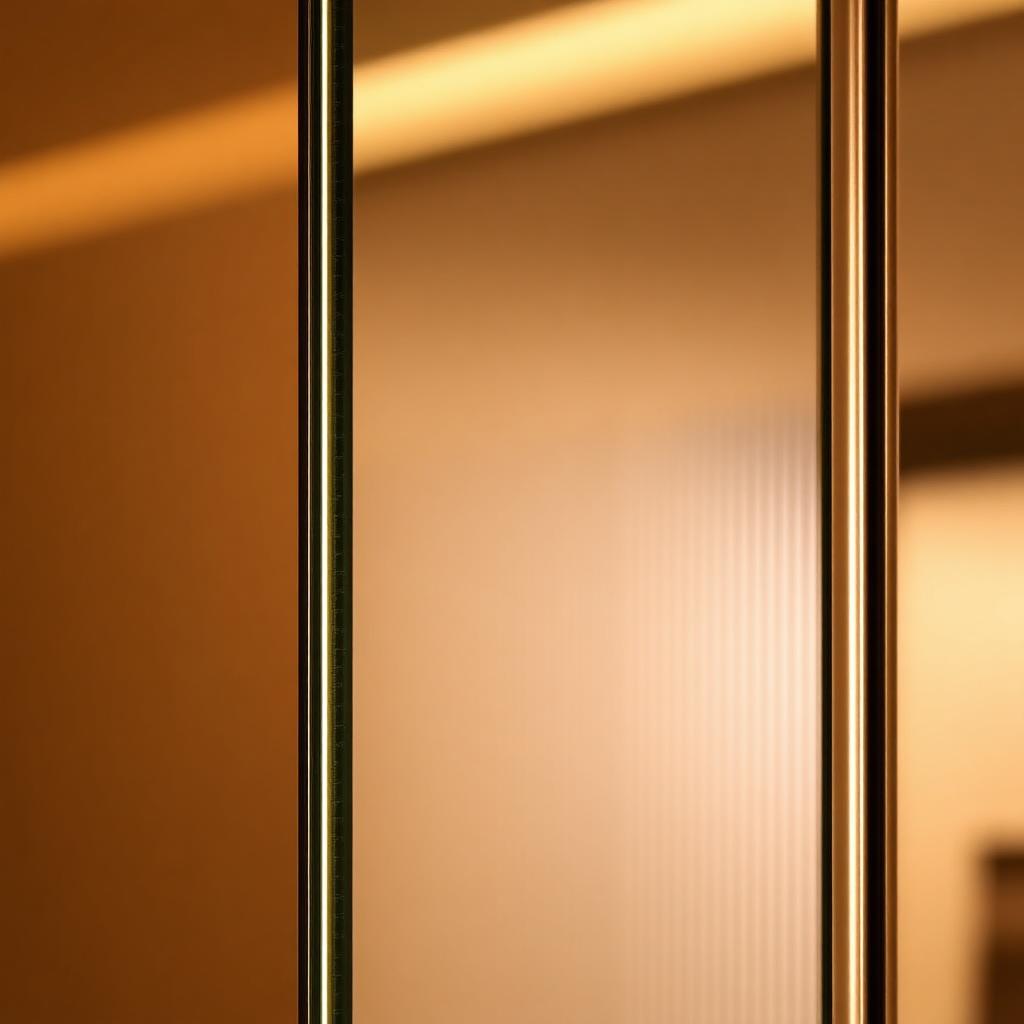
Real veneer, textured wood-effect panels, painted lacquered finishes, glass, mirror and metal each behave differently in a room. Veneer gives natural depth and varies beautifully across a long run. Textured boards offer warmth and durability with a very consistent appearance. Painted finishes recede into the architecture. Leather and suede details — used sparingly — bring quiet luxury to drawer interiors and valuables trays.
Detail the lighting and hardware
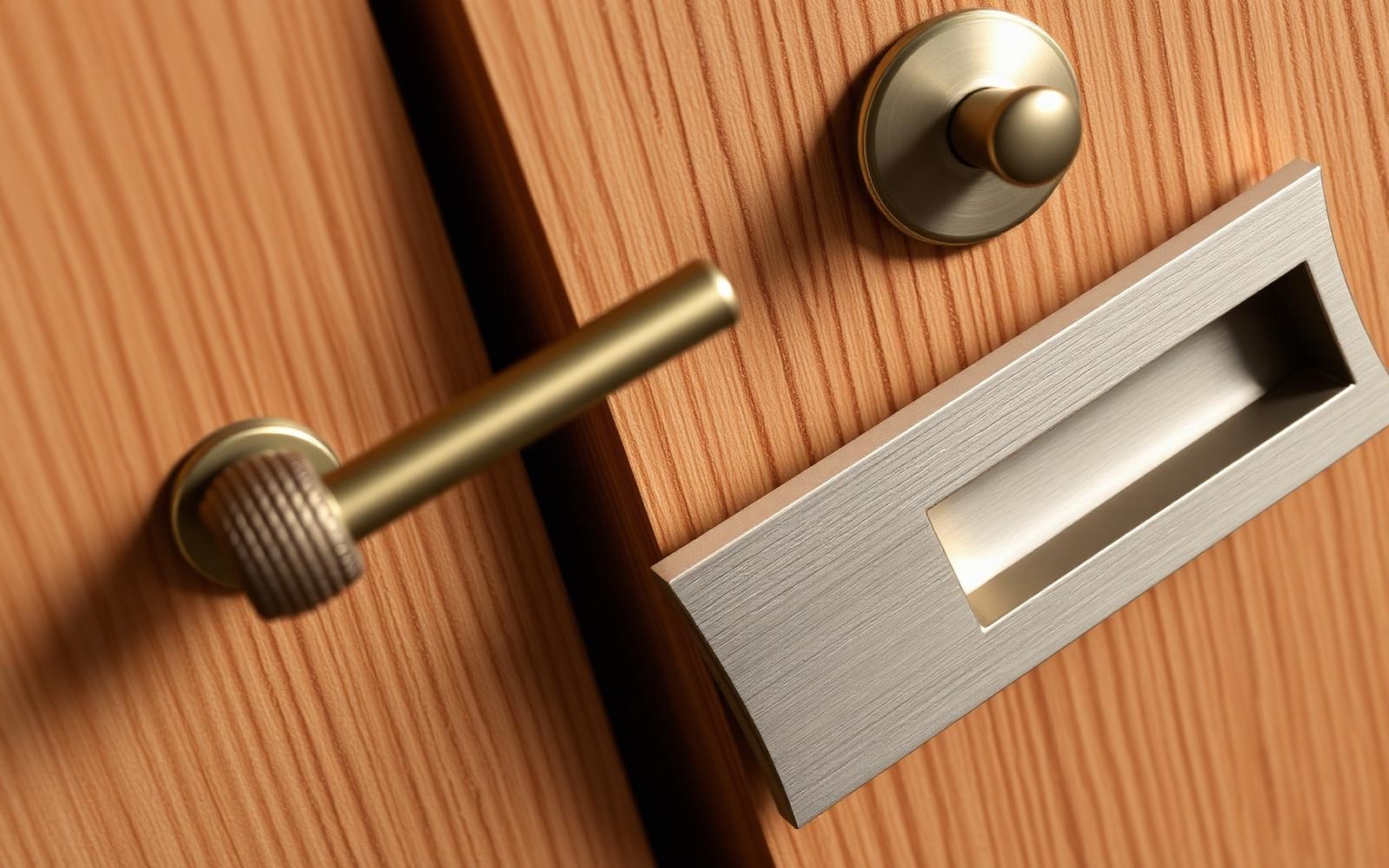
Integrated warm-white LED, sensor lighting and shelf or drawer lighting need to be considered at design stage so cabling, transformers and switching can be detailed properly. Handles should be specified around door height, finish and hand feel — knurled brass and slim bar handles read very differently in the same room, even on the same door.
Why local manufacture matters
Manufacturing in London keeps the loop short. Measurements can be re-checked on site, panels can be adjusted to the millimetre, and installation is carried out by the same team that built the wardrobes — not a separate subcontractor working from a third party's drawings. It is also the reason aftercare stays straightforward years later.
How a design visit helps
A free design visit replaces guesswork with a proper conversation about your room. Within an hour, you should have a clear sense of layout options, finish direction and likely investment level — and an honest view of what is worth doing now and what could wait.
Made-to-measure wardrobes will not suit every brief, but where they are right, they give back floor space, calm the room, lift everyday routine and stay desirable far longer than freestanding alternatives.